What makes an invasive...invasive?Invasive species threaten native species and ecosystems and cause billions of dollars in damage and control measures annually. Despite their notoriety and impact, much remains poorly understood about the biology of invasive species. The extent to which invasiveness is the result of a few key phenotypes or life histories, or whether such ability is idiosyncratic to a species, is a hotly debated question.
Genus Salvinia - primed for invasion?
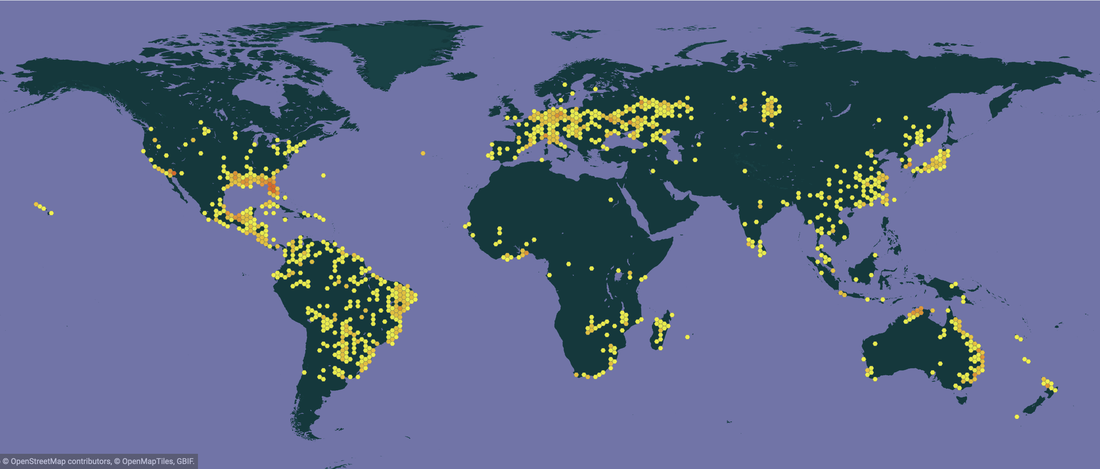
Genus Salvinia comprises a small number of aquatic heterosporous ferns native to either Central and South America or Eurasia. Of the 12 species that have been described, 10 are listed as invasive somewhere in the world! One species, Salvinia molesta, is on the IUCN Top 100 Most Invasive Species List, and is listed as invasive in 55 countries.
|
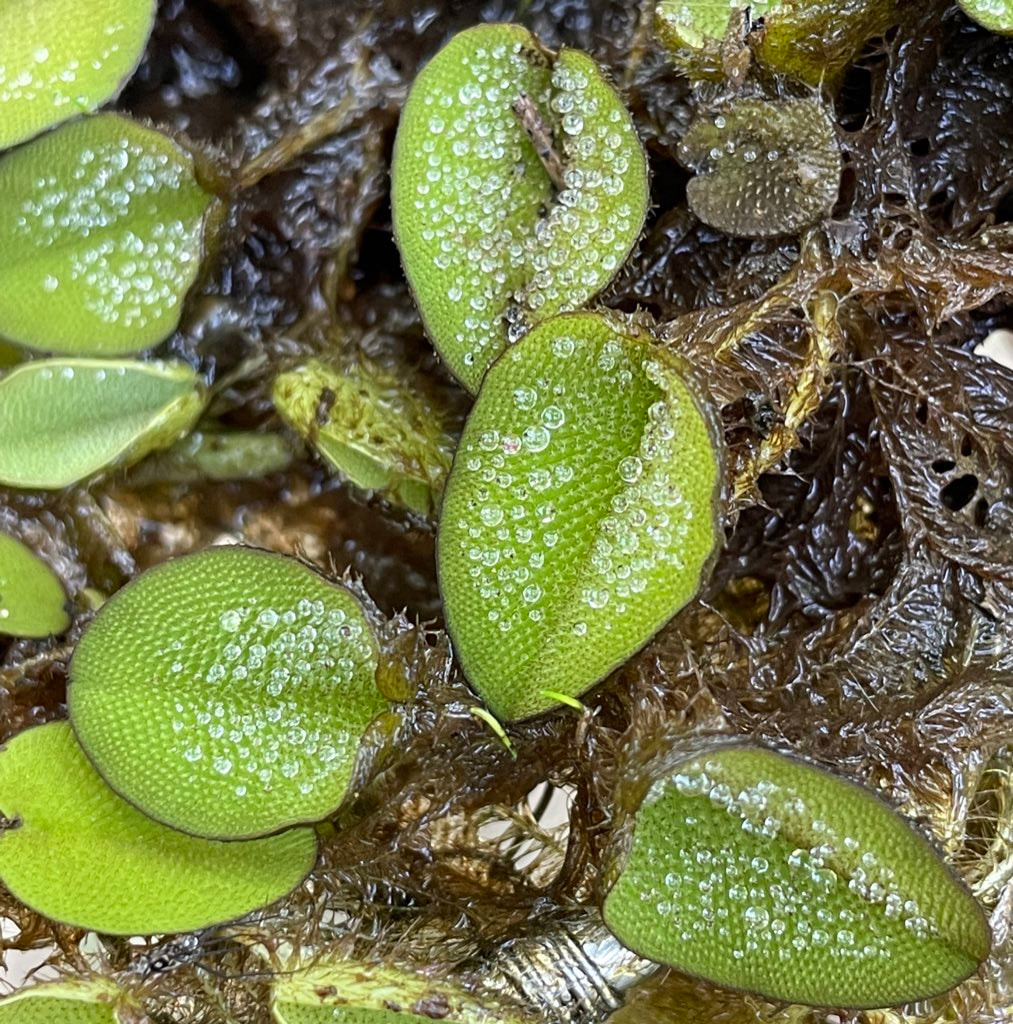
Close-up of Salvinia minima, Choctaw NWR, Alabama
|
Salvinia in the United States
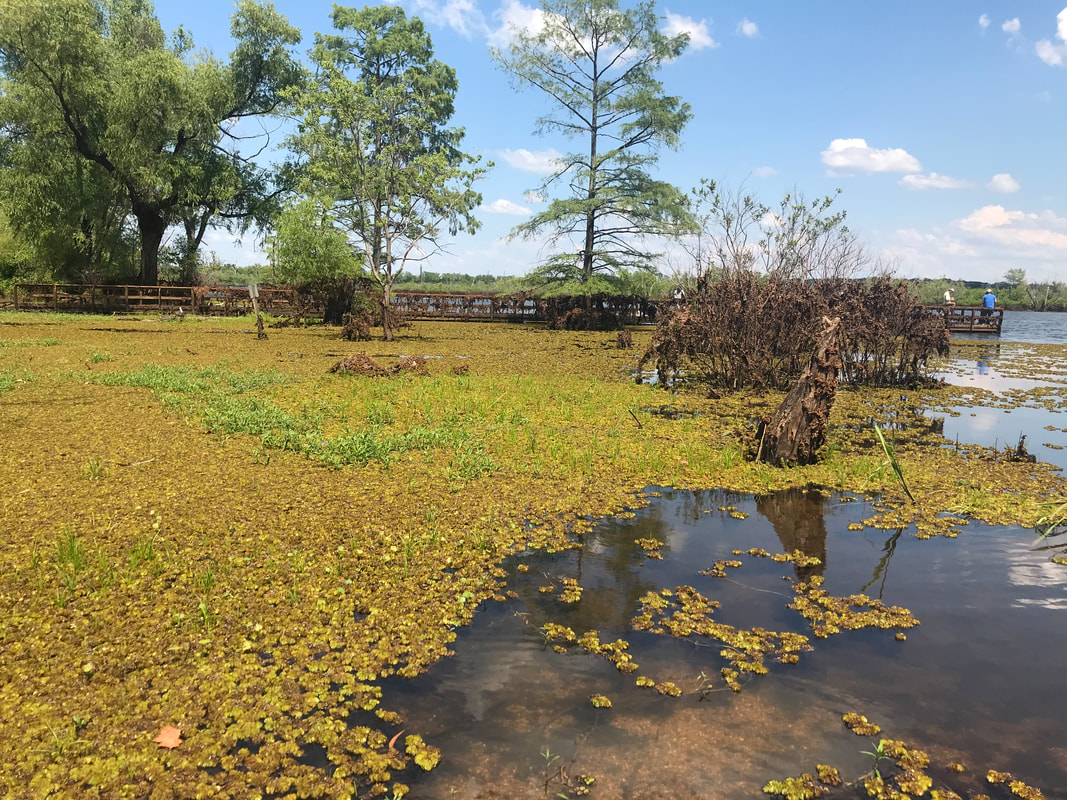
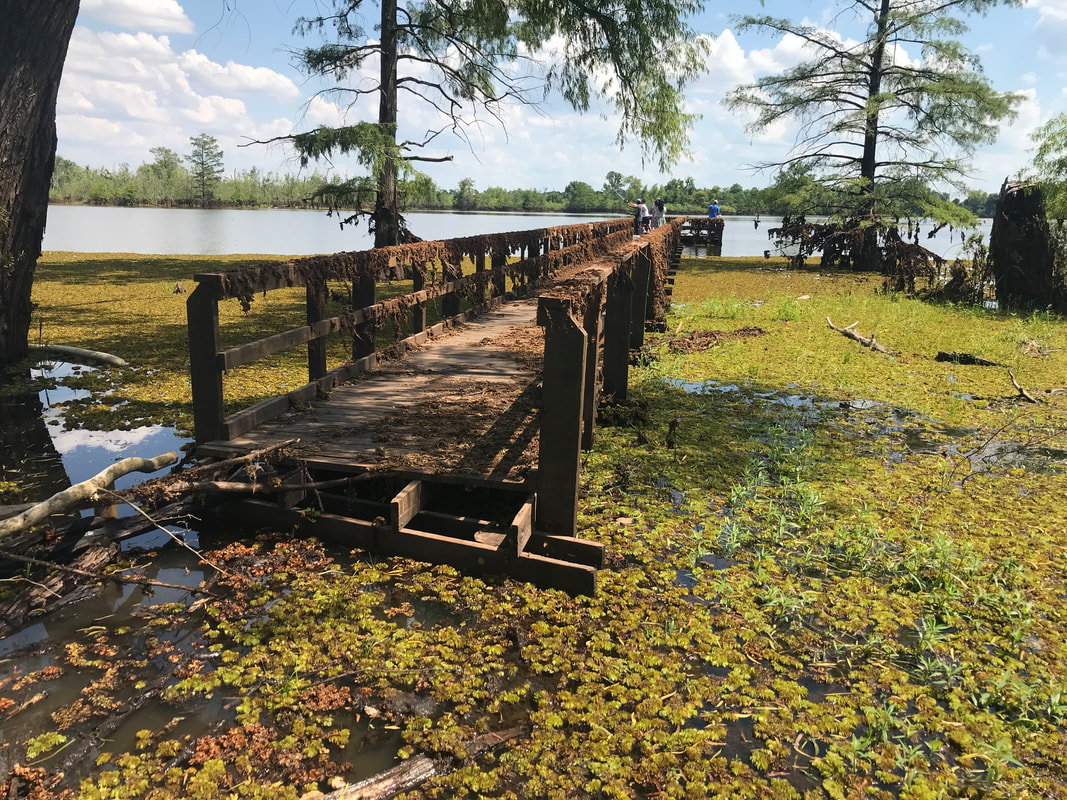
Two Central and South American species, Salvinia molesta and S. minima, have established invasive ranges in the southeastern U.S. along the Gulf Coast and in California. Imported initially in the 1960's and 1990's as aquarium plants, they quickly established footholds in slow-moving freshwater bodies. These two species have become major pests along the U.S. Gulf Coast; fouling wetlands and swamps, interfering with boating and fishing, choking out native aquatic plants, and lowering dissolved oxygen levels. In some cases, infestations have become so severe that docks, marinas, and lakeside parks (such as C. Bickham Dickson Park in Shreveport, LA shown below) have become so overgrown and damaged they have been closed permanently.
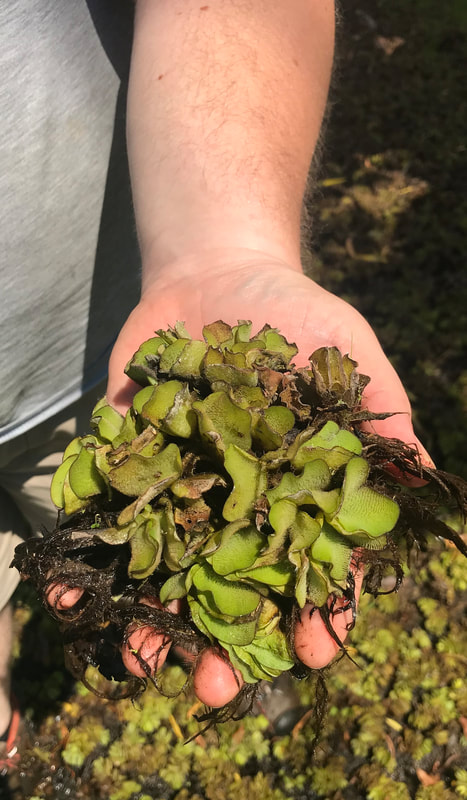
As part of the Consortium for Plant INvasion Genomics, I have been collecting S. molesta and S. minima throughout eastern Texas, Louisiana, Mississippi, and Alabama. My collaborators and I have also been sampling herbarium specimens from both native and invasive ranges. Using hyRAD sequencing, we will characterize the invasion history of both species, and study the adaptations that have made these unassuming ferns so destructively successful!
Watch this space!
As part of the Consortium for Plant INvasion Genomics, I have been collecting S. molesta and S. minima throughout eastern Texas, Louisiana, Mississippi, and Alabama. My collaborators and I have also been sampling herbarium specimens from both native and invasive ranges. Using hyRAD sequencing, we will characterize the invasion history of both species, and study the adaptations that have made these unassuming ferns so destructively successful!
Watch this space!
|
|
|